Al-Battānī and His Contributions
Al-Battānī (d. 929), known in Europe as Albategnius, stands as one of the most influential figures in the history of astronomy. His meticulous observations, spanning approximately from 877 to 918, were predominantly conducted in Raqqa, with some in Antioch. Al-Battānī gained renown for the remarkable accuracy of his astronomical observations. These observations laid the foundation for his major astronomical opus, known as al-Zīj al-Ṣābiʾ (Latin: De scientia stellarum). The term zīj refers to a genre of astronomical works, encompassing mathematical and astronomical tables along with instructions for their use. Typically, Zījes comprise trigonometric tables, spherical astronomy functions, geographical coordinates of localities, planetary mean motion data, planetary equations, and guidelines for calendar conversions.
Al-Battānī and Trigonometry
Al-Battānī’s work stands as one of the earliest examples of astronomical literature to encompass a comprehensive series of trigonometric tables. Moreover, he employed a range of advanced functions in spherical trigonometry, demonstrating his mathematical prowess. In the realm of practical observation, al-Battānī crafted highly precise astronomical instruments himself, underscoring their large sizes to attain the utmost accuracy. It’s worth noting that the majority of the astronomical parameters featured in his tables were a result of his meticulous observations and calculations. Even when drawing upon data from his predecessors, al-Battānī rigorously scrutinized and validated these values over the course of his extensive observational career.
Al-Battānī’s influence
Al-Battānī’s remarkable precision in observations rendered his work immensely influential, both within the Islamic world and Europe. During the 12th century, his work found its way into Latin translations twice. The first translation, attributed to Robert of Chester, has unfortunately not survived. The second, by Plato of Tivoli, was printed in Nuremberg in 1537 and later in Bologna in 1645.
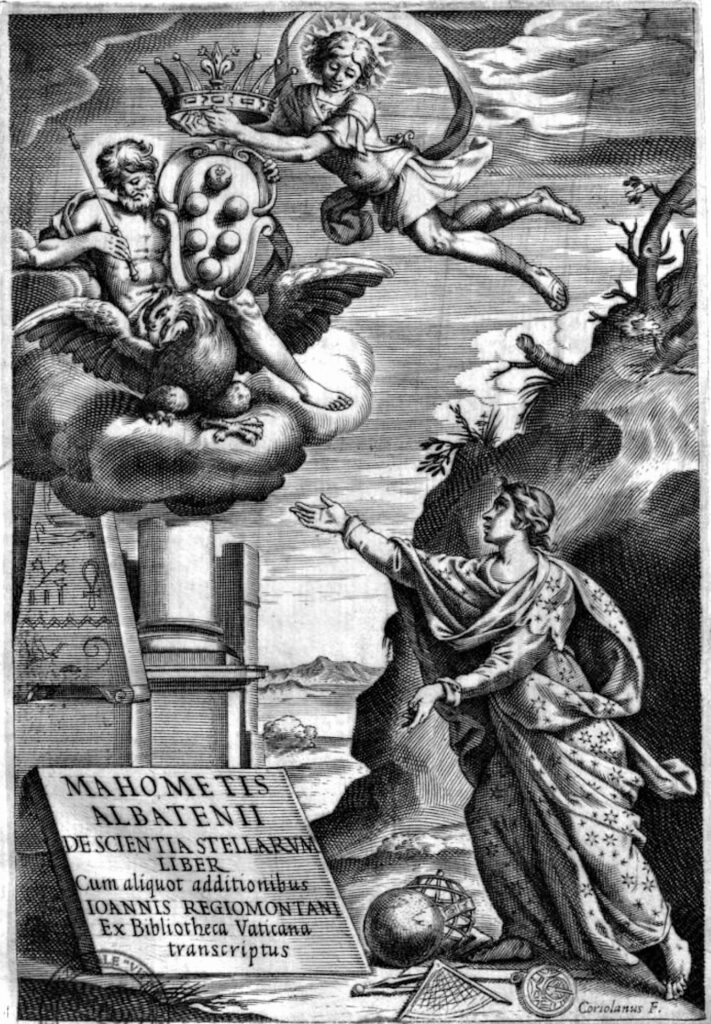
Around 1260, a Castilian translation was derived from al-Battānī’s original Arabic text, with parts of it preserved in manuscript form, including tables. In addition to Latin and Castilian, Hebrew versions of al-Battānī’s work were produced by scholars like Bar Ḥiyya in the 12th century and Immanuel ben Jacob Bonfils in the 14th century. These translations played a pivotal role in making al-Battānī’s contributions accessible to European luminaries such as Regiomontanus, Copernicus, Brahe, Johannes Kepler, and Galileo Galilei.
This article is contributed by Sajjad Nikfahm Khubravan