Hipparchus’ Contributions
Hipparchus is widely regarded as one of the most significant astronomers of ancient times. Unfortunately, little of his work has survived to the present day, and we only know about his astronomical activity through Ptolemy’s reports in the Almagest. Ptolemy cited several of Hipparchus’ observations, many of which were likely conducted by the astronomer himself while he was in Rhodes. The earliest observation mentioned dates back to September 26/27, 147 BC, while the latest was a lunar position recorded on July 7, 127 BC. In addition to his work in Rhodes, Hipparchus was also active in Bithynia, likely in Nicaea, his place of birth.
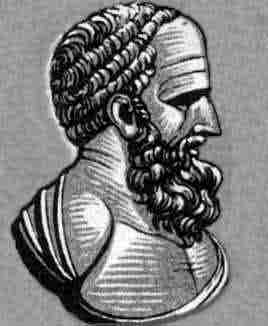
Hipparchus and the Motion of Earth
Hipparchus is credited with discovering the precession motion of the Earth’s axis. However, due to the widely accepted hypothesis of the immobility of the Earth, he attributed this motion to the stars, suggesting that they moved in such a way that the equinoxes did not remain in a fixed position relative to them. The fact that precession can only be observed over a long period indicates that Hipparchus must have benefited from earlier, precise observations. Indeed, Hipparchus’s use of earlier observations is also evident in his numerical parameters for the cycles of the Moon. According to Ptolemy, Hipparchus drew upon Babylonian sources, and this claim is supported by extant Babylonian sources that include all the underlying parameters used in Hipparchus’s cycles. Using these earlier observations, along with his own, Hipparchus developed his theory of the Sun, Moon, and eclipses.
Hipparchus’ Astronomical Instrument
Hipparchus also constructed an astronomical instrument called the “four-cubit diopter,” which he used to measure the apparent diameters of the Sun and Moon. This instrument is described by several ancient sources, including Ptolemy, Pappus, and Proclus. The four-cubit diopter was made of a wooden rod with a rectangular cross-section. An observer would look through a hole in a block located at one end of the rod and then move a prism that slid in a groove along the top of the rod until the prism exactly covered the object being observed. By measuring the ratio of the breadth of the prism to its distance from the sighting hole, the observer could determine the chord of the apparent diameter of the object.
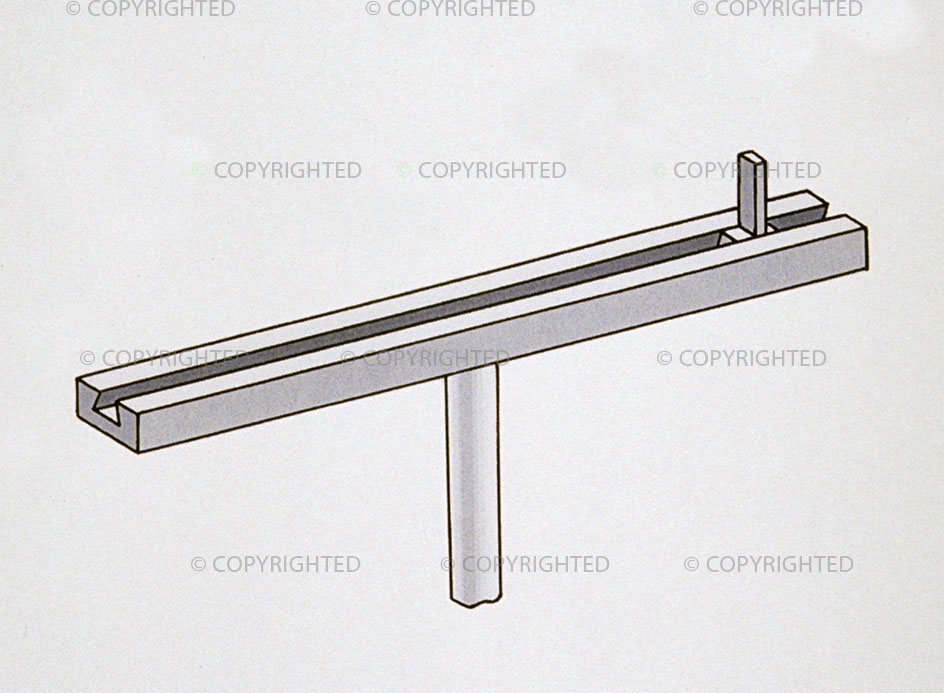
A schematic representation of Hipparchus’ diopter. Credit: Museo Galileo
Fixed Stars and Hipparchus
Hipparchus also devoted considerable attention to the study of the arrangement of stars in the sky. These stars, known as “fixed stars” in ancient and medieval times, were so-called because their relative positions did not appear to change to the naked eye. Many ancient cultures investigated the stars and constellations, including Greek astronomy. However, the works of earlier astronomers like Eudoxus (fl. 380 BC) and Aratus (fl. 240 BC) did not contain any mathematical astronomy and only described the relative positions of stars. In contrast, Hipparchus developed a mathematical system for recording the positions of stars and compiled a catalog of stars (see a new discovery about Hipparchus’ star catalogue).
In ancient mathematics, the only trigonometric function that was used was the chord function. It is known that Hipparchus calculated a table of chords, and he was likely the earliest mathematician to do so. Some scholars argue that this means that Hipparchus “transformed Greek astronomy from a purely theoretical into a practical, predictive science.”
This article is contributed by Sajjad Nikfahm Khubravan