The History of Indian Astronomy
Indian astronomy possessed distinctive characteristics that set it apart from other astronomical traditions. There was a continuous effort within the Indian astronomical tradition to preserve it as faithfully as possible. However, it is essential not to assume that Indian astronomy remained entirely static. On the contrary, Indian astronomy experienced the influence of new theories from the West on at least five occasions:
- In the fifth century B.C., through Mesopotamia via Iran. (Probably late in the fifth century B.C., during the dominance of the Achaemenids in northwestern India, there was a significant transmission of Mesopotamian literary material to India).
- In the second and third centuries A.D., via Mesopotamia and Greece.
- In the fourth century A.D., directly from Greece.
- In the tenth to eighteenth centuries, from Iran.
- In the nineteenth century, from England.
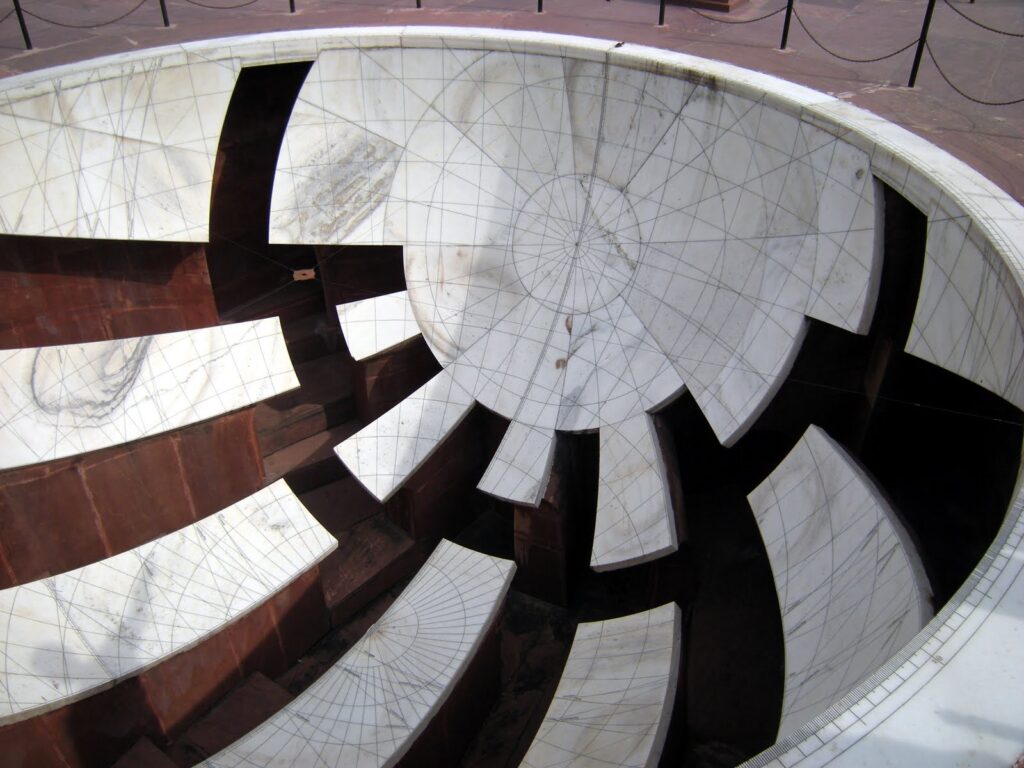
The Inconsistency in the History of Indian Astronomy
The occurrence of these intrusions did not lead to the disappearance of earlier Indian astronomical traditions. Instead, the convergence of these various traditions necessitated transformations and adjustments within both the established native or assimilated theories and the newly introduced foreign ones. Consequently, it was common for certain contradictions to persist. As a result, internal consistency was not a primary expectation within any Indian astronomical system. This tolerance for inconsistency proved to be a significant factor that hindered Indian astronomers from making substantial theoretical advancements. Their focus primarily revolved around refining the computational aspects rather than delving into the logical foundations of mathematical astronomy. Furthermore, the absence of a well-established tradition of observational astronomy allowed them to experiment with models and parameters that often failed to accurately predict celestial phenomena.
Greeks vs Indians
Furthermore, Indian astronomers faced the unfortunate circumstance of receiving, in the first three transmissions from the West, theories that were either outdated in their countries of origin or regarded as less advanced. For example, despite the significant influence of Greek astronomy on Indian astronomy during the period contemporary with, and immediately following, Ptolemy, Indians remained largely unaware of most aspects of Ptolemaic astronomy until the seventeenth century. However, for historians studying Hellenistic astronomy, this fact, coupled with the conservative nature of the Indian tradition, offers valuable insights. Much of what we know about Greek astronomy from the era spanning Hipparchus to the fourth century A.D. can be found in Sanskrit texts. It is worth noting that due to the Indian inclination to adapt intellectual imports and the imperfect nature of the earliest surviving texts, pinpointing the precise origins of the Greek texts upon which the Sanskrit texts are based can be challenging. Nevertheless, scholars aim to conduct thorough analyses and comparisons of these sources in hopes of gradually achieving a more accurate understanding of Hellenistic astronomy than what can be gleaned solely from the surviving Greek tradition.
Sanskrit in Astronomy
The earliest available Sanskrit astronomical treatises were written in the late fifth and sixth centuries A.D., notably the Āryabhaṭīya of Āryabhaṭa and works by Varāhamihira. It is of great interest to see that at that time there existed already the need for a historical survey of Indian astronomy, thus causing Varāhamihira to explain in his Pañcasiddhāntikā the systems followed by five different siddhāntas (thus the name), among others the early version of the Sūryasiddhānta, a famous work which has come down to us only in a much later version. Another influential Sanskrit work was the Khaṇḍakhādyaka of Brahmagupta, written in A.D. 665.
This article is contributed by Sajjad Nikfahm Khubravan